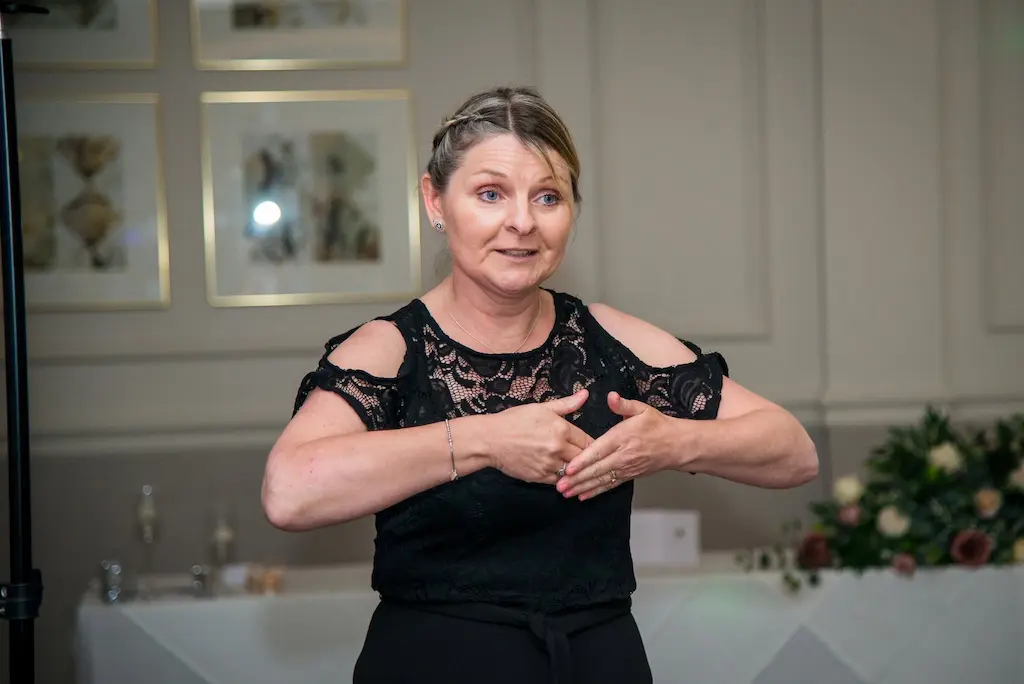
Verona Snow
My Name is Verona Snow and my passion for British Sign Language first started during my nine years as a Communication Support Worker in education, alongside a decade of immersion in the Deaf community. Although family commitments required me to pause with my studies , my drive to continue with Interpreter Training was very important to me.
Returning to complete my interpreter training with Appa was a transformative experience. Part one immersed me in the fascinating theory behind the role—from core linguistic principles and interpreting skills to professional ethics. Navigating the workload and preparing portfolio video evidence required dedication, but regular supervisor check-ins and tailored practical opportunities gave me the structure and confidence I needed.
Now, with over three years of practice as an RSLI, I handle a diverse range of domain work: supporting students in education, facilitating medical appointments, and interpreting at significant life events like weddings and funerals. While the work brings its unique challenges, it is immensely rewarding. To anyone considering this path: invest in yourself, go for it, and embrace the journey!
Holly Briggs
I was born profoundly deaf and grew up using spoken English as my main language. As I became older, I wanted to strengthen my connection with the Deaf community and gain a deeper understanding of Deaf culture. This inspired me to begin learning British Sign Language, a decision that has opened the door to new friendships, opportunities, and a greater sense of belonging.
Wanting to further develop my BSL skills and confidence, I enrolled on the Level 3 BSL course with APPA because I wanted to further develop my signing skills and increase my confidence when communicating in BSL. Throughout the course, I enjoyed learning more about Deaf culture and history, meeting people from a variety of backgrounds, and improving my language skills in a supportive environment.
The feedback I received from the BSL tutors was invaluable. It was helpful, encouraging, and provided me with the tools I needed to continue developing both my BSL ability and my confidence. The course challenged me in the right ways and helped me progress much further than I thought possible.
Achieving my Level 3 qualification has really supported me in my career and provided me with an insight into other career opportunities, such as, working alongside deaf children and young people.
My advice to future students would be to take every opportunity to practise BSL at Deaf events and within the Deaf community. Real-life conversations are one of the best ways to increase your knowledge, confidence, and fluency. Most importantly, take that first step towards learning BSL. It opens up new experiences, opportunities, friendships, and a much deeper understanding of the Deaf community.
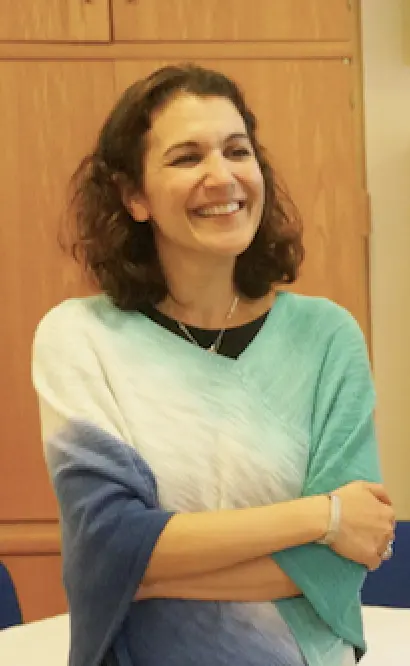
Vicki Ashmore
I think my BSL journey started many years before I started to learn BSL! My grandmother lost her hearing and later, her sight. It left a lasting mark on me. Later I made friends with BSL users, so I had to learn BSL to survive! And when my (deafblind) friend Zoe asked me to set up a social group with her, I didn’t think twice. That’s when BRIGHT deafblind was born, and we just celebrated our 10th anniversary!
BRIGHT needed interpreters whenever we had events, but we weren’t an official charity so we had no funding to pay them. By then I was working as a CSW so I would just interpret as best as I could. I knew I wasn’t interpreting to a professional standard so I decided to train to do a better job for BRIGHT.
I have to say the course was one of the most stressful things I’ve ever done. But what I enjoyed most was that I never felt alone or unsupported. I really believed that my teachers wouldn’t let me fail – that they believed in me and would support me until I passed. And that’s exactly what happened.
I started my career because of the deafblind community, but I’ve managed to branch out considerably since then. I’ve used all my past careers and education to get me to this point – my undergraduate degree in biology has stood me in good stead for interpreting medical appointments and later, on podiums for medical conferences. But my deafblind interpreting is still the focus of my career. I’m still very involved in BRIGHT, I joined the BSL Advisory Board for 3 years to represent interpreters who work with deafblind people, and I now sit on a Tactile Communication Advisory Board working with researchers at UCL to study deafblind communication modalities. I never would have had the confidence to apply for any of these jobs or sit on these boards if it weren’t for the work I did while studying for my interpreter’s diploma.
My advice? Do it. It’s hard work but fulfilling. And honestly, I’m still learning how to be a better interpreter after qualifying 6 years ago. The course was only the first step on a long, wonderful road.
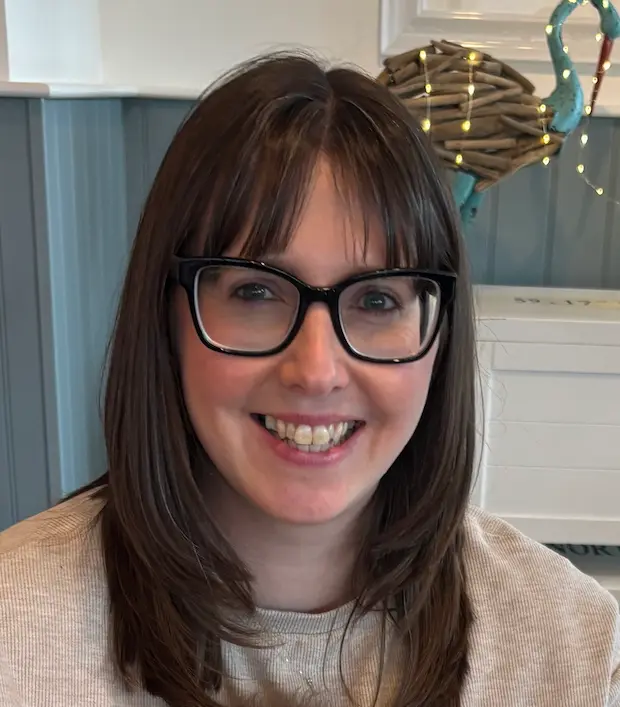
Amy Walker
I am based in Scotland and joined a cohort of interpreters during Covid which meant that all my evidence for my portfolio had to be filmed remotely via Zoom.
Appa were very supportive with technology as well as offering some appropriate assignments for me to film as evidence. The staff were very encouraging during the times I was doubting myself and offered robust feedback sessions to improve my practice.
The CPD was great to develop my skills but also to meet fellow interpreters, albeit via Zoom.
I would recommend joining an interpreting cohort as you will be supported every step of the way.
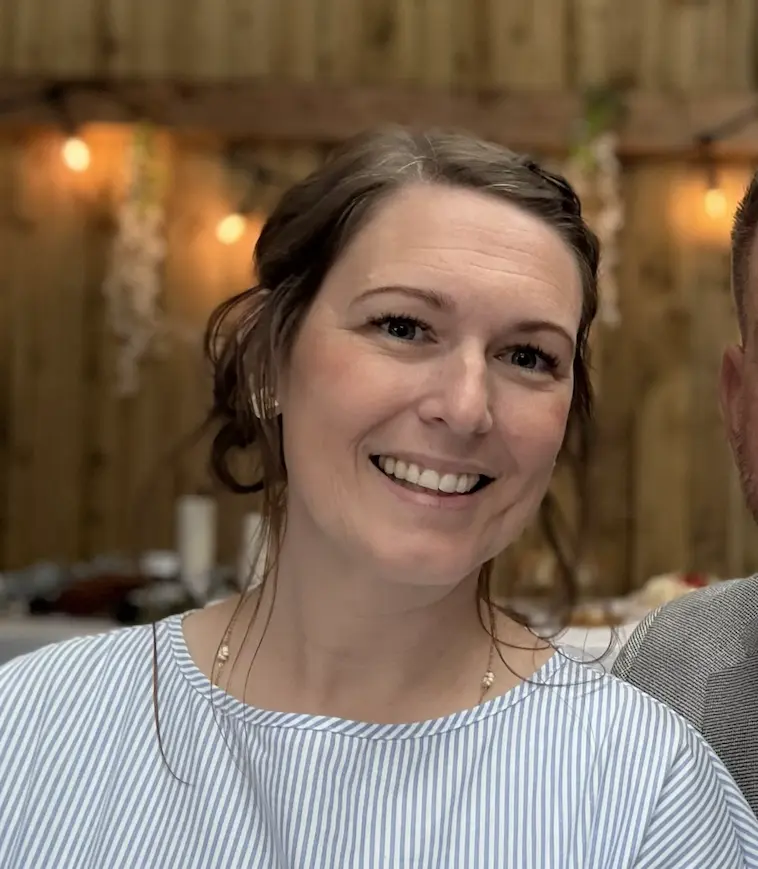
Elena Van Zandt
I started working as a CSW at a young age. I love sign language and am always fascinated to learn new ways or signing something. After 20 years as a CSW, I wanted to stretch my skills and move into the community. What a journey it has been! Looking back I wish I’d of done it sooner. Every day is different, the people I meet are so appreciative and I am learning so much. Each domain is so vast, the more I learn, the more I realise how little I know.
I am happy I made the jump from CSW to interpreter, as I feel the role is so different. My skills have definitely increased, but I now feel like a professional in the room and conduct myself as such.
The course was good for me personally, as I was able to do it at my pace. I had a target date in mind and was able to get the work done to meet my own deadline.
If there is anything I have heard repeatedly since becoming qualified, it’s that there are not enough interpreters. People are still attending appointments with no idea if they’ll be able to communicate or not.
I love my job, I love the flexibility it gives me and my family, I love the opportunity it gives me to grow and the people I get to meet. If anyone is considering becoming an interpreter, I would say- it is definitely hard, but it is absolutely worth it.
Thanks
Elena
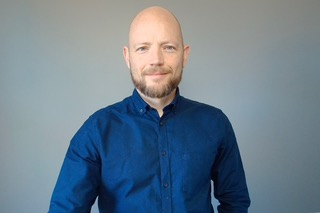
Mark Bennett
I have been signing for the past 24 years as a member of the sign language community of Jehovah’s Witness but only began to think about doing it for work a few years ago. I did my interpreter qualification with APPA due to the flexibility of doing the course online. I was moving from one region to another at the time, as well as working part time and caring for my wife who was long term sick. APPA supported me all the way through, even making reasonable adjustments for my dyslexia so that I could learn in a way that suited by brain as well as submit my evidence in a way I could handle.
I could not have done this course successfully without their flexible and supportive approach! Since then, I have specialised in remote interpreting and conference interpreting, working at national level conferences both inline and in person. I have lived in several places since qualification, and the remote side of things has helped me keep a regular schedule despite these moves.
If you need flexibility or are neurodiverse, I highly recommend APPA for your qualification process.
Mark Bennett
RSL
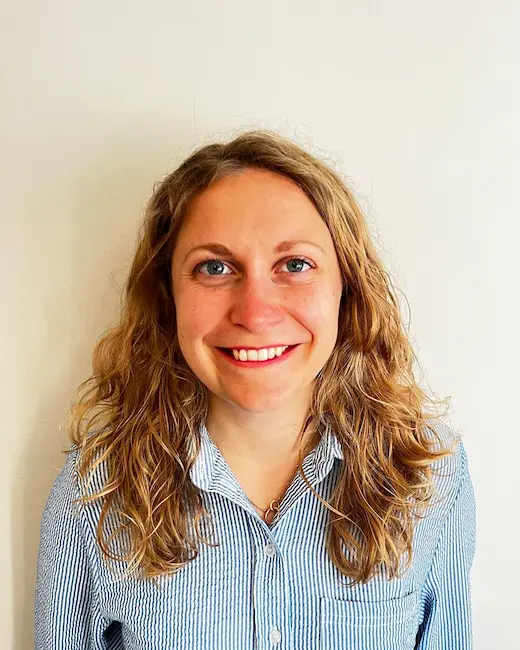
Stephanie Broodbank
Knowing that I wanted to be a Speech and Language Therapist and that communication fascinated me, I completed BSL Level 1 aged 18 at my local adult education centre . Quite early in my career I found myself working with deaf teenagers and loving it. I recognised that knowing more BSL was essential not just for my clinical caseload but also to communicate with deaf colleagues and gain more insight into the Deaf world. I did my Level 2 at Appa Me Ltd with a colleague and it was challenging but enjoyable. Seven years later as the Speech & Language Therapy clinical lead for Deafness, it made sense to return to Appa and the familiar, friendly, supportive environment, to start my level 3. They were incredibly patient and helpful while I worked out how to source funding, as you are dealing with a family-run business who genuinely care about their learners and clients.
I felt that in order to provide a service for Deaf children, young people and their parent/carers, it is essential to know as much as possible about the language and culture of the d/Deaf world. I also find knowledge of and use of BSL crucial to build rapport with bilingual or BSL using d/Deaf colleagues e.g. Teachers of the Deaf, Deaf tutors. Plus, I love the visual and conceptual nature of the language. It makes so much more sense to my brain and my way of learning than a written or oral language.
Having 2 tutors who can each share their knowledge and experience, from a Deaf BSL user and a CODA has been invaluable. They are both so encouraging and always willing to help answer any questions or point me in the right direction. I like how they are able to make the course content relevant and functional, and not solely about passing exams. The mix of ages and abilities in our group means that we can all learn from each other.
Doing the activities in class and the homework tasks has helped my BSL vocabulary and skills in general to grow quicker than I expected. It has given me the confidence to use new signs and ways of explaining myself in BSL that I might have avoided in the past. It has also continued to validate my views that d/Deaf children and their parents/carers having access to learn BSL is not optional, it is essential.
You won’t regret learning BSL at any level, and you won’t regret choosing Appa Me Ltd, which I can say as someone who will (hopefully!) have completed 2 of my levels there. It seemed like a big commitment, and that is because it is, but once completed, it is a qualification that I feel very proud to have.
Steph Broodbank